

US Intercepts Five Russian Warplanes Near Alaska, NORAD Says No Threat

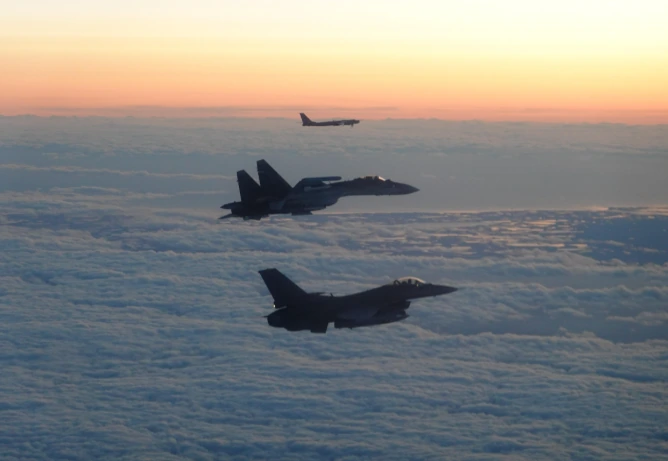
US intercepts five Russian warplanes near Alaska after NORAD detected and tracked Russian military aircraft operating in the Alaskan Air Defense Identification Zone near the Bering Strait. The aircraft remained in international airspace and did not enter American or Canadian sovereign airspace, according to NORAD’s public statement.
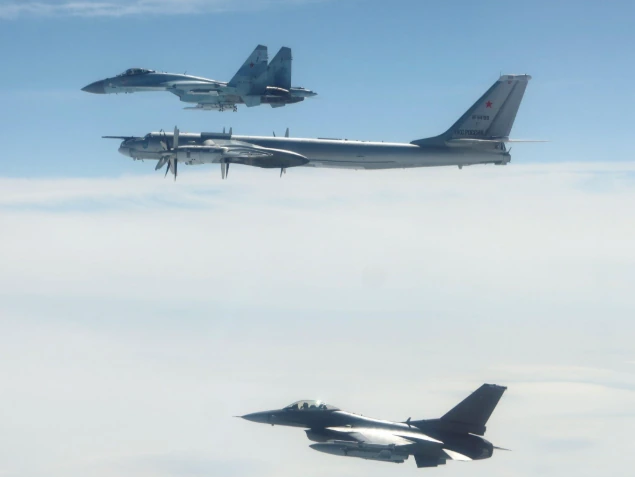
The incident involved two Tu-95 bombers, two Su-35 fighter jets and one A-50 airborne early warning and control aircraft. NORAD responded with fighter jets, surveillance aircraft and refueling tankers to identify and escort the Russian planes until they left the area.
What Happened Near Alaska
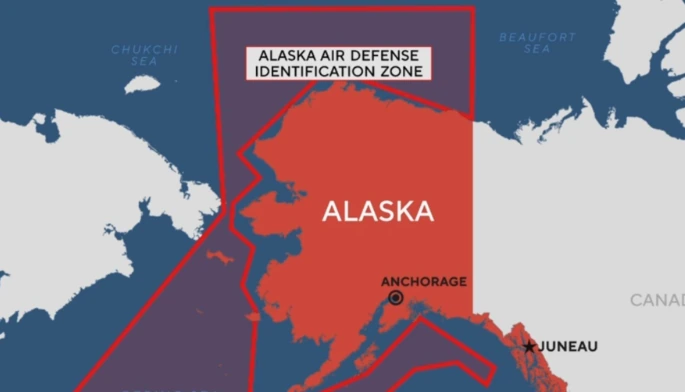
The Russian aircraft were detected on February 19, 2026, while operating inside the Alaskan Air Defense Identification Zone, commonly called the ADIZ. This zone extends beyond sovereign airspace and acts as an early-warning area where aircraft are expected to identify themselves for national security reasons.
NORAD launched two F-16s, two F-35s, one E-3 surveillance aircraft and four KC-135 refueling tankers. The response was not described as an attack or emergency engagement. Its purpose was to intercept, identify and escort the Russian aircraft while monitoring their movement near North America.
That distinction matters. An intercept does not automatically mean hostile action. In this context, it means defensive aircraft were sent to meet, observe and track foreign military aircraft operating near the North American defense perimeter.
Why NORAD Said It Was Not a Threat
NORAD said the Russian aircraft stayed in international airspace and did not enter U.S. or Canadian sovereign airspace. The command also described this type of activity in the Alaskan ADIZ as regular and not viewed as a direct threat.
That does not mean the event was ignored. NORAD used a layered defense network that includes satellites, ground-based radar, airborne radar and military aircraft. The response shows that the U.S. and Canada treat these flights seriously even when they are not classified as provocative.
The difference is between monitoring and escalation. A foreign aircraft can fly legally in international airspace, but when it approaches an ADIZ, North American defense forces want to know who it is, where it is going and whether it poses any risk.
The Aircraft Involved
The aircraft mix was notable because it included different roles. The Tu-95 is a long-range Russian bomber. The Su-35 is a fighter aircraft often used for escort and air superiority missions. The A-50 is an airborne early warning and control aircraft, meaning it can help coordinate activity and monitor airspace.
Together, that formation suggests a planned military aviation patrol rather than a random flight. It also explains why NORAD responded with several aircraft types of its own. F-16s and F-35s provided fighter interception capability, the E-3 supported airborne surveillance, and KC-135 tankers helped keep the response aircraft operating over distance.
Why the Bering Strait Matters
The Bering Strait is a narrow body of water between Alaska and Russia. It is only about 50 miles wide at its narrowest point, making it one of the most geographically sensitive areas between North America and Russia.
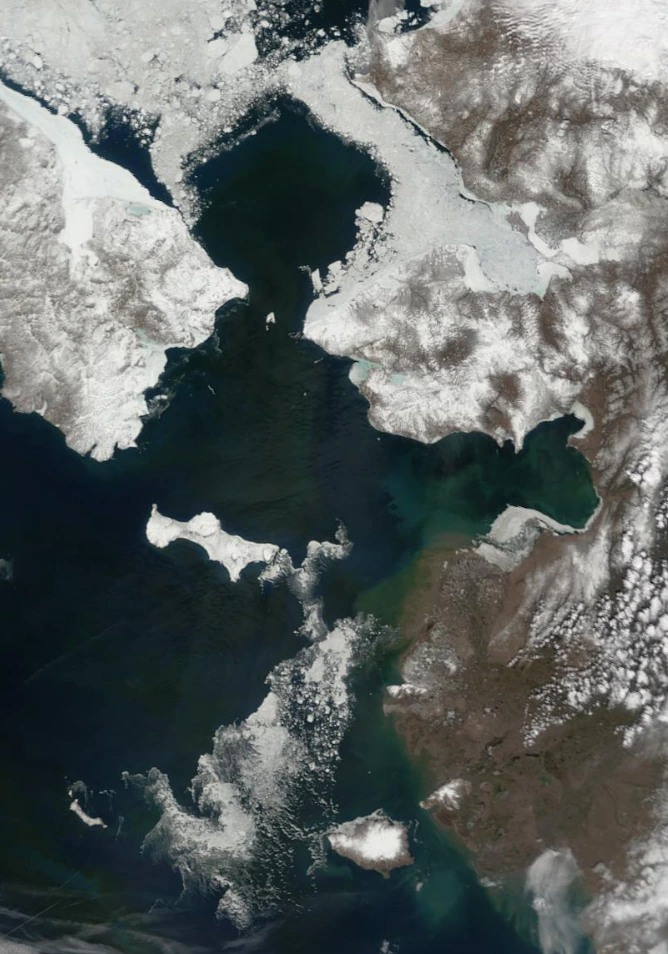
Because of that geography, Russian warplanes near Alaska attract attention even when they remain outside sovereign airspace. The region sits between the Pacific and Arctic, and it has military, strategic and symbolic importance.
For Alaska, this is not an abstract issue. NORAD’s Alaska operations are based at Joint Base Elmendorf-Richardson in Anchorage, which makes the state a front-line part of North American air defense.
What the Alaskan ADIZ Means
An Air Defense Identification Zone is not the same thing as national airspace. Sovereign airspace begins over a country’s territory and territorial waters. The ADIZ extends beyond that boundary and functions as a security buffer.
Aircraft entering an ADIZ are expected to identify themselves. If they do not, or if their movement requires closer monitoring, defense forces may launch aircraft to intercept and identify them.
This is why NORAD can respond even when Russian aircraft have not violated U.S. or Canadian airspace. The goal is early awareness, not waiting until an aircraft reaches sovereign territory.
Is This Unusual?
Russian aircraft activity near Alaska is not new. NORAD has repeatedly tracked Russian military aircraft in the Alaskan ADIZ in recent years. Previous encounters have also involved Tu-95 bombers and Su-35 fighters, with U.S. aircraft launched to monitor and escort them.
The regularity does not make the flights meaningless. Each event tests readiness, communication and response time. It also gives both sides a chance to observe procedures and capabilities.
For the public, the key point is balance. The flights are serious enough for NORAD to respond, but not automatically signs of an imminent conflict.
Why This Story Matters
The incident matters because it shows how quickly military activity near Alaska can become a national security headline. Five Russian military aircraft near the Bering Strait naturally raise concern, especially during a period of wider tension between Russia and Western governments.
At the same time, the facts are more restrained than the headline may sound. The Russian aircraft did not enter U.S. or Canadian sovereign airspace. NORAD did not describe the activity as an attack. The response followed a standard defensive pattern: detect, track, intercept, identify and escort.
That is the main takeaway. The encounter was not dismissed, but it was also not treated as a direct threat.
What to Watch Next
Future incidents near Alaska will depend on the same core details: how many aircraft are involved, what type they are, whether they remain in international airspace, and how NORAD characterizes the activity.
If Russian aircraft enter sovereign airspace, behave aggressively or operate in unusual patterns, the significance changes. If they remain in the ADIZ and follow a pattern NORAD has seen before, the event stays closer to routine strategic aviation activity.
For now, this case shows a familiar but important reality of North American defense. Alaska remains one of the key places where U.S., Canadian and Russian military aviation activity comes close enough to require constant attention.