

Stray Dog Wolf Hybrid in Anchorage: What Gary’s Case Revealed

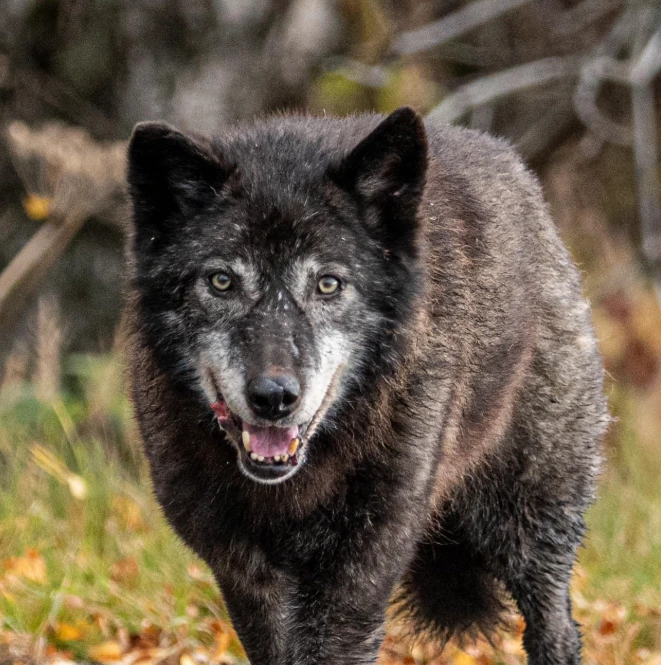
A stray dog wolf hybrid that roamed Anchorage under the nickname “Gary” was confirmed by genetic testing to be a wolf hybrid, ending weeks of public speculation about whether the animal was a dog, wolf, or something in between. The Alaska Department of Fish and Game said the test confirmed hybrid status, but did not determine the percentage of wolf ancestry.
The case drew attention because Gary behaved unlike a typical wild wolf. She moved through busy urban areas, appeared near roads and neighborhoods, and was repeatedly spotted by residents across different parts of Anchorage. Her story became part mystery, part public safety lesson, and part reminder that wolf-dog hybrids create difficult questions for communities, wildlife officials, and pet owners.
How Gary Became an Anchorage Mystery
Gary first became widely known after Anchorage residents began sharing sightings, photos, and videos online. The animal had a black-and-gray coat, a wolflike build, and enough doglike behavior to make identification difficult from appearance alone.
Reports placed Gary in several parts of the city, including Sand Lake, Midtown, Hillside, and East Anchorage. That wide movement helped fuel speculation. Some residents thought she looked like a wolf. Others believed she was probably a large dog or malamute mix. The uncertainty made the story spread quickly because each new sighting seemed to add another clue without settling the main question.
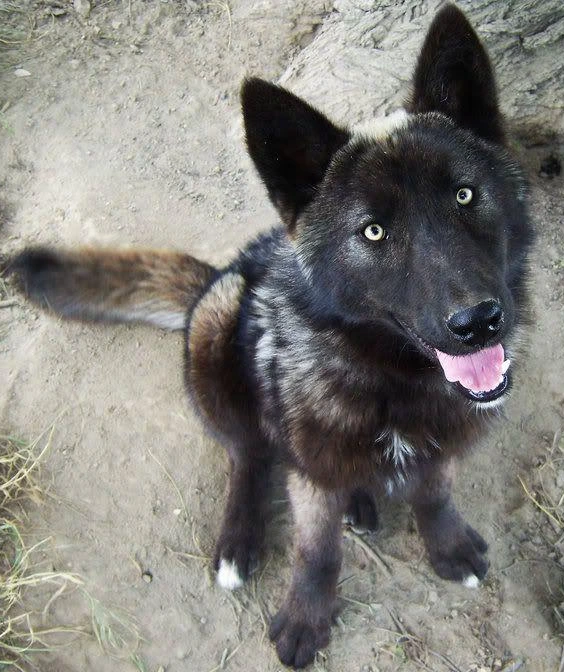
The name “Gary” also gave the animal a public identity. Once people begin naming a roaming animal, the story changes. It becomes easier to follow, easier to talk about, and easier for a community to feel emotionally attached. That is part of why the confirmation later mattered so much to residents who had watched the situation unfold.
The Genetic Test Confirmed a Wolf Hybrid
Visual identification was not enough in Gary’s case. Fish and Game officials collected samples and sent them to the Veterinary Genetics Laboratory at the University of California, Davis, for wolf-dog hybridization testing. The result came back positive for wolf hybrid ancestry.
That answer was important, but it was not complete. The test did not provide a percentage of wolf DNA. It confirmed Gary was a hybrid, but it did not say whether she was close to a wolf parent, several generations removed, or somewhere in between.
This distinction matters because “wolf hybrid” is not one simple category. Some animals may look mostly like dogs and still carry wolf ancestry. Others may look more wolflike but behave unpredictably because genetics, upbringing, socialization, and environment all shape behavior.
UC Davis explains that wolf-dog hybrid testing can detect hybridization within three generations, but it does not provide a breed breakdown or exact percentage of wolf ancestry. That makes the test useful for answering the core question — wolf hybrid or not — while still leaving some details unresolved.
Why Appearance Alone Was Not Enough
Gary’s case shows why identifying a wolf hybrid by sight can be unreliable. Large northern breeds such as huskies, malamutes, and shepherd mixes can share visual traits with wolves: thick coats, pointed ears, long legs, narrow muzzles, and heavy winter fur.
At the same time, wolf hybrids can vary widely. Some may look unmistakably wolflike. Others can pass as unusual dogs until behavior or testing raises questions. That is why officials were cautious before announcing a conclusion.
Gary’s behavior also complicated the picture. Fish and Game noted that traveling through urban streets and sidewalks near people would be very unusual for a wild wolf, since wild animals generally avoid close contact with humans. But unusual behavior alone does not prove an animal is domestic, hybrid, sick, lost, or habituated. It only shows that the situation deserves caution.
Gary’s Death and the Community Response
Gary was found dead on October 7 near Minnesota Drive and 26th Avenue. She was not wearing a collar, and officials said she was likely killed by a vehicle. She was described as an older female and weighed 67 pounds when found.
Her death changed the tone of the story. What had been an online mystery became a community loss for people who had followed her movements. Residents who had watched the sightings unfold reacted with shock, sadness, and frustration.
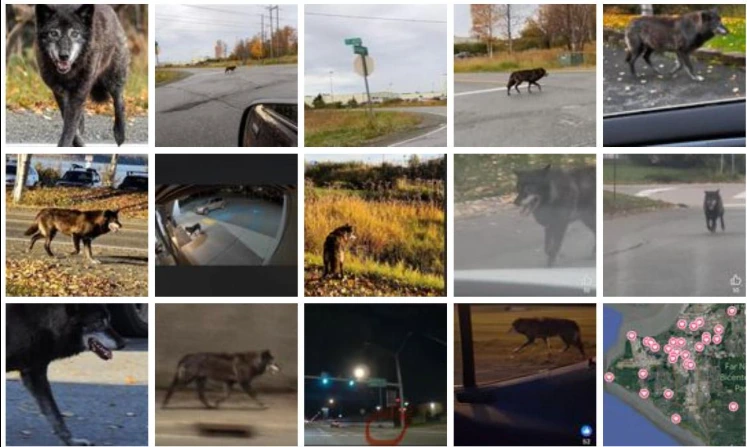
One response came through memorial rocks painted in Gary’s honor, some decorated with a howling wolf design and hidden around town. That kind of tribute shows how quickly an animal can become part of local memory, even when no one knows where it came from or who, if anyone, had once cared for it.
The emotional reaction also reflects a larger tension. People were fascinated by Gary, but her presence in the city was not safe for her or for the public. A roaming wolf hybrid near traffic, neighborhoods, and people creates risk even when the animal is not acting aggressively.
Where Did Gary Come From?
One of the biggest unanswered questions is Gary’s origin. Officials did not know whether she had been kept illegally, escaped from somewhere else, traveled from another part of Alaska, or lived independently before appearing in Anchorage.
That uncertainty is central to the story. A wolf hybrid does not simply belong loose in a city. If Gary had been owned by someone, then the case raises questions about responsibility, containment, and illegal possession. If she had been wandering for a long time, it raises different questions about survival, movement, and how an animal like that navigates an urban environment.
Fish and Game officials said they did not have answers about what Gary was doing before she began being reported in Anchorage. That leaves her story partly unresolved, even after the DNA test settled the species question.
Are Wolf Hybrids Legal in Anchorage?
Wolf hybrids are illegal to own in Anchorage. Alaska defines a wolf hybrid as offspring from a wolf or wolf hybrid with a dog or another wolf hybrid. Possession rules matter because these animals can create serious management challenges for owners and communities.
The issue is not only whether a wolf hybrid looks intimidating. The deeper concern is unpredictability. Dogs have been shaped by thousands of years of domestication. Wolves have not. A hybrid may show doglike familiarity in one situation and more wolflike caution, escape behavior, or prey drive in another.
That makes them difficult pets, especially for owners who underestimate containment, training, socialization, and legal responsibility. Gary’s case did not prove where she came from, but it did show why cities treat wolf hybrids differently from ordinary dogs.
Wolves in Anchorage Are Not Impossible, But Gary Was Different
Wolves do live in and around Anchorage. Fish and Game has identified multiple wolf packs within city limits, and Alaska has thousands of wolves statewide. So the idea of a wolf-related animal near Anchorage is not impossible.
But Gary’s behavior was unusual for a wild wolf. Moving through high-traffic areas, appearing close to people, and roaming across developed neighborhoods made the case stand out. A truly wild wolf would usually avoid that pattern unless something unusual was happening.
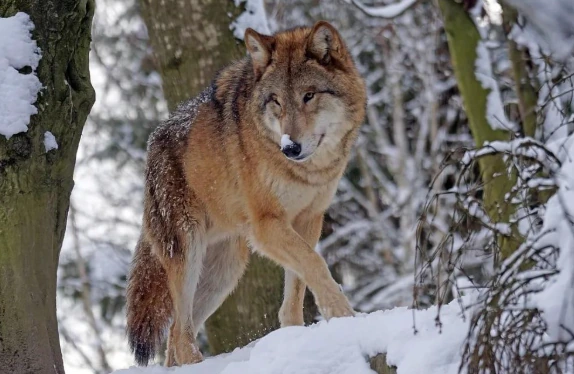
This is why the public speculation was understandable. Gary looked wolflike enough to raise questions, but moved through the city in a way that did not fit a simple wild-wolf explanation. The genetic test ultimately gave the clearest answer available: she was a wolf hybrid.
What Residents Should Learn From the Case
Gary’s story is memorable, but the practical lesson is straightforward. If residents see an animal that looks like a wolf, wolf hybrid, or distressed large dog, they should keep distance, avoid feeding it, protect pets, and report the sighting to the proper local authorities.
Trying to approach, chase, photograph closely, or “rescue” an unknown canid can make the situation more dangerous. Even a frightened domestic dog can bite when cornered. A wolf hybrid adds another layer of uncertainty because behavior may not match what people expect from either a pet dog or a wild wolf.
The safest response is observation from a distance. Location, direction of travel, time of sighting, and clear photos from a safe position are more useful than direct contact.
Why Gary’s Story Still Matters
Gary’s case mattered because it combined urban wildlife, pet ownership, public curiosity, legal boundaries, and community emotion in one story. The DNA result answered the main question, but it did not solve the mystery of how she ended up roaming Anchorage.
For residents, Gary became more than a strange animal seen from a car window or trail camera. She became a symbol of how close wildness can feel in Alaska’s largest city — and how complicated that closeness becomes when domestic animals, wolf ancestry, and human neighborhoods overlap.
The final answer is clear enough to report: Gary was a wolf hybrid. The bigger lesson is more cautious. Animals like Gary do not fit neatly into the categories people want to use. They are not ordinary pets, not fully wild wolves, and not safe urban wanderers. That is why the story left Anchorage with both an answer and a warning.